"If sex is an occupational folly, an existential absurdity, then not having sex is even worse, for it leads in most cases to extinction, a non-existential absurdity. And so there must be big advantages to sex, advantages that overwhelm the foolhardiness of doing so. The advantages are surprisingly hard to gauge and made the evolution of sex the 'queen' of evolutionary problems through much of the twentieth century." (124)
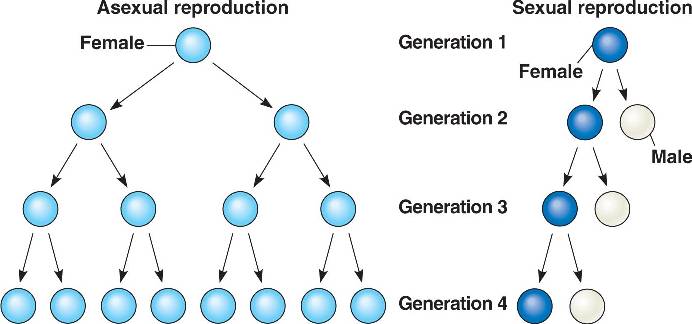
The most recent chapter spoke of sex… more specifically the evolution of sexual reproduction. I found this chapter to be incredibly interesting and hugely related to the course material. The big idea I found that relates to the class is how unnecessary sex it is. Lane says how sexual reproduction is not necessary because asexual reproduction is much more efficient. Sexual reproduction initially evolved because of its copious benefits, but there are so many losses due to it. These benefits are how sexual reproduction allows to the removal of harmful mutations, allows for the best combination of best genes possible, and increases fitness of the individual by passing on their genes. However, at the same time the flaw of sexual reproduction is that it is ver resource costly! The female has to put in so many resources to create the egg, and then to grow and raise the offspring. For this reason, Lane and many other biologist argue that sexual reproduction as many benefits as it has is not the best method of reproduction possible. They all argue that asexual reproduction is the way to go because it still ensure genes are passed on - increasing fitness, but the downfall is that there is no gene recombination or removal of deleterious mutations.
Overall I found this chapter to be incredibly interesting. The largest reason for this is because for Biology 1 I read the Book about the Evolution of Sex. And the topics were so incredibly similar so everything i read brought back memories about the book. The huge connection made this one of my favorite chapters in the book to read.

No comments:
Post a Comment